Drinks
Colombian Coffee: How to Brew It Well at Home
How to brew Colombian coffee at home without ruining it — the right grind for each method, water ratio, temperature, and the most common mistakes.
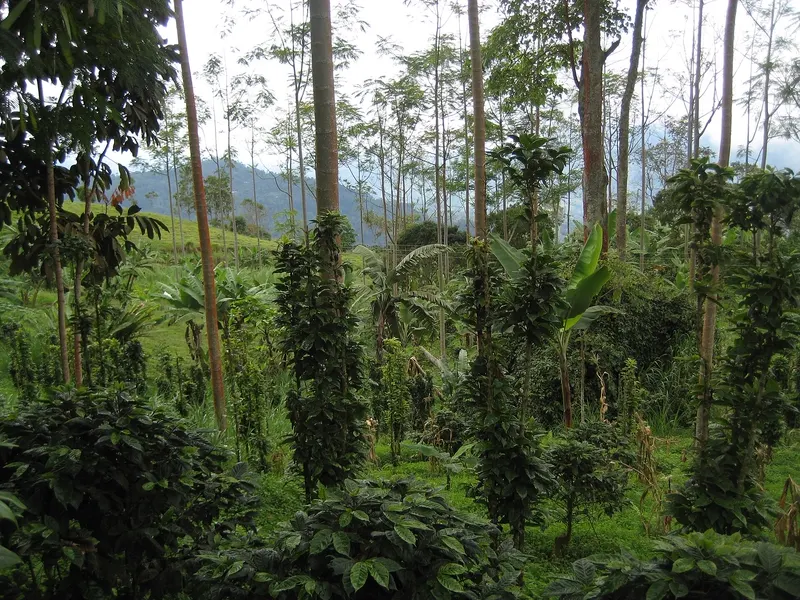
Colombia is one of the world's largest producers of mild arabica coffee, but it's common for coffee inside the country to be brewed worse than it's grown: the wrong grind, water that's too hot, or beans ground weeks ago. Brewing a good cup at home doesn't require expensive equipment — it requires understanding what happens to the bean at every step.
Why Colombian coffee sometimes tastes bad at home
A large share of the coffee people drink day to day in Colombia isn't the country's best bean — the highest-quality lots tend to be exported or sold to specialty shops — and on top of that, nearly every household makes the same mistake: grinding the coffee too far in advance. Ground coffee loses its aroma within hours, not weeks, because grinding the bean exposes far more surface area to air. If possible, the ideal is to grind right before brewing, even with a simple hand grinder.
The grind, by method
There isn't one correct grind — it depends on how long the water stays in contact with the coffee.
Cloth filter (the traditional method)
Medium to coarse grind. The cloth filter, common on farms and in homes across the coffee region, lets water pass through more easily than a paper filter, so a very fine grind clogs it and the coffee comes out over-extracted and bitter.
Drip coffee maker
Medium grind, similar to coarse table salt. It's the middle ground most home electric coffee makers expect.
French press
Coarse grind, close to large-cracked pepper. The coffee sits in contact with the water for several minutes with no paper filter, so a fine grind leaves sediment and excess bitterness.
Moka pot (Italian stovetop)
Fine grind, similar to espresso but a touch less compact. The water passes through under pressure in a short time, so it needs more contact surface to extract flavor.
Water and temperature
Water at a rolling boil (100°C / 212°F) scorches the coffee and brings out bitter notes that mask the bean's real flavor; the ideal is to let it sit for about 30 seconds after boiling, until it drops into the 90–96°C (194–205°F) range. The water itself matters too: water with a lot of chlorine or very hard water changes the final flavor, so if your tap water has a strong taste, it's worth using filtered water instead.
The coffee-to-water ratio
The base recipe for almost any method is 1 gram of coffee for every 15 to 17 grams of water (roughly one tablespoon of ground coffee per 200 ml cup, adjusted to taste). Those who prefer a milder coffee lean toward 1:17; those who like it stronger, toward 1:15. Measuring with a scale, even if it sounds excessive for a home brew, is the most reliable way to repeat a good result every day.
How it's traditionally drunk in Colombia
In Colombia, everyday coffee has its own names depending on how it's served: tinto is black coffee, usually already sweetened; perico has a bit of milk in it; and pintado has nearly equal parts coffee and milk, similar to a latte but served in a small cup. None of the three is usually a "specialty" coffee brewed with a scale — they're the quick, everyday version of Colombian coffee, the one that accompanies most Colombian breakfasts across the country.
Storing coffee at home
Whole beans (or already-ground coffee) keep best in an airtight container, in a cool, dark place, away from the stove or direct light. The freezer isn't a bad idea for large bags that will take weeks to use up, but once a portion has been opened for daily use, it's better left at room temperature — the temperature swings from moving it in and out of the cold create condensation, which is bad for coffee.
Frequently asked questions
What's the correct coffee-to-water ratio?
Between 1:15 and 1:17 (grams of coffee per grams of water) is the range most home methods use. Less water makes a stronger coffee; more water, a milder one.
Why does my coffee turn out bitter even with good beans?
Almost always because of water that's too hot (at a rolling boil) or a grind that's too fine for the method you're using, which over-extracts the coffee and pulls out bitter flavors instead of the bean's natural sweetness.
Is it better to grind coffee at home or buy it already ground?
Grinding right before brewing preserves far more aroma, because ground coffee loses freshness within hours, not weeks. If you don't have a grinder, buying in small, frequent amounts is the next best option.
What's the difference between tinto, perico, and pintado?
Tinto is black coffee; perico has a bit of milk; pintado has nearly equal parts coffee and milk. All three are everyday ways of drinking coffee in Colombia, distinct from specialty coffee brewed with a scale and weighed water.
Keep cooking
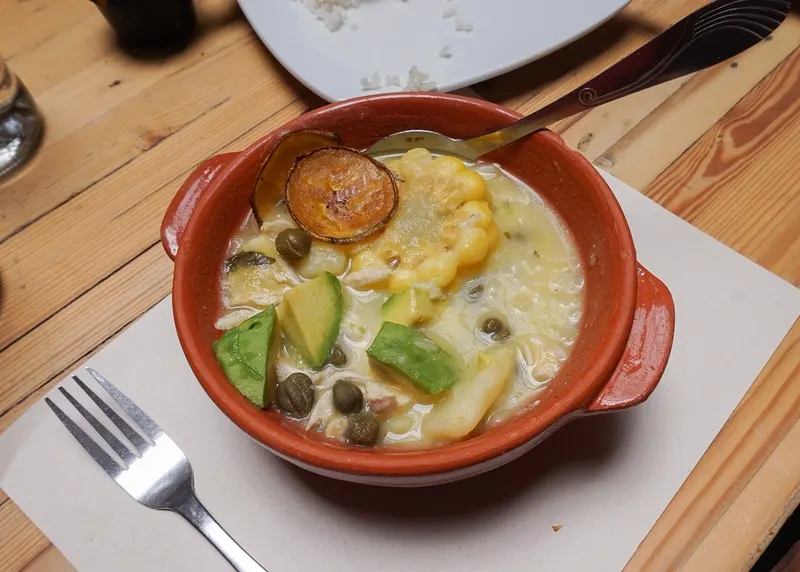 Traditional foodAjiaco Santafereño: Bogotá's Traditional RecipeHow authentic ajiaco santafereño is made — the three potatoes, the guasca herb, the chicken, and the side dishes — and why every ingredient matters.
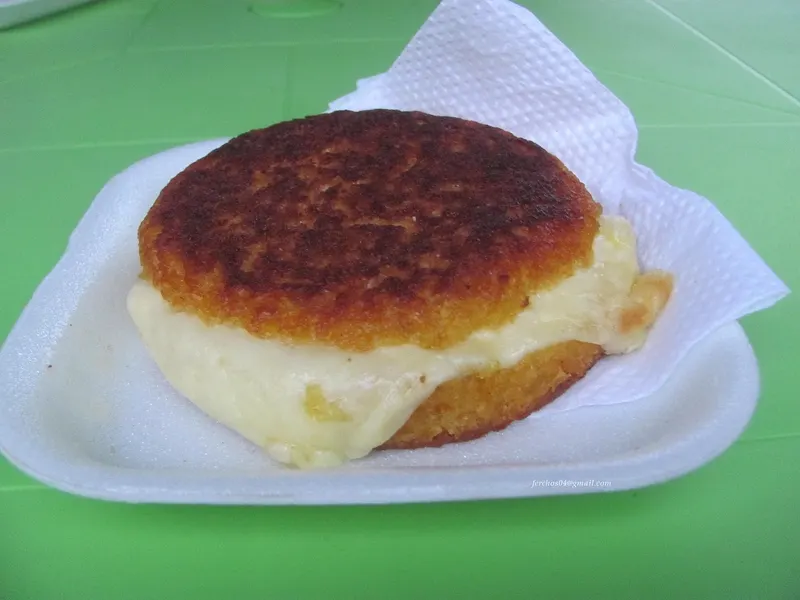 Traditional foodColombian Arepas: Types, Differences, and How to Make ThemA guide to the most common Colombian arepas — cheese, chócolo, boyacense, paisa — and how to make them at home without them cracking or sticking.
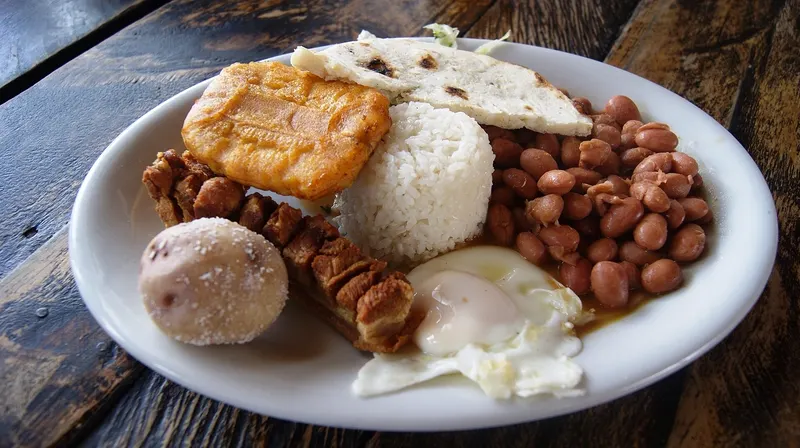 Traditional foodBandeja Paisa: The Complete Guide to Colombia's Most Famous PlateWhat goes into an authentic Colombian bandeja paisa, how each component is prepared, and the most common mistakes people make cooking it at home.